ADU Rules in Pinellas County: What Changed After Florida SB 102
Florida SB 102 dramatically changed ADU rules statewide, but local zoning still dictates your lot.
State Permission vs. Local Pinellas County Building Reality
Florida SB 102 dramatically changed ADU rules statewide, but local zoning still dictates your lot.
This massive gap between state-level permission and local Pinellas County reality constantly stalls ADU projects. Homeowners read online that Florida legally opened the door to accessory dwelling units everywhere. They eagerly find a beautiful floor plan and call a contractor immediately.
Then, they discover their physical lot coverage is completely maxed out. They learn their strict rear setback leaves zero room for a detached unit. They find out connecting utilities requires installing a highly expensive separate water meter locally.
This guide strictly explains both regulatory layers governing accessory dwelling units. We detail exactly what SB 102 changed and what local authorities still aggressively control. We explain four mandatory property-specific variables you must confirm before any design conversation begins.
What SB 102 Changed and What Pinellas Still Controls
Florida SB 102 legally blocked local governments from outright prohibiting ADUs on single-family lots.
Before the Live Local Act passed in 2023, individual cities routinely blocked ADU construction completely. They utilized strict zoning codes to prevent backyard cottages entirely. SB 102 completely removed that blanket prohibition option statewide.
Any city in Florida must now allow ADU development on single-family residential lots legally. However, SB 102 set a regulatory floor, never a regulatory ceiling. The state law did not override strict local setback requirements or tight lot coverage limits.
It never bypassed local utility connection rules or strict short-term rental ordinances locally. Florida broadly said yes to ADUs, but Pinellas County said yes with heavy conditions. Your exact physical address determines exactly which strict local conditions legally apply.
How Local Authorities Implement State ADU Laws
Confirming your exact local jurisdiction remains the critical first step before designing an ADU.
Your exact physical address determines your governing jurisdiction, not your basic city mailing name. Properties inside Largo city limits fall strictly under the Largo Community Development Department. Properties in unincorporated Pinellas County filter strictly through the Pinellas County Construction Licensing Board (PCCLB).
These two distinct agencies maintain completely separate review processes, fee schedules, and permit timelines. Generic online ADU guides frequently describe Pinellas County rules as one universal regulation. That assumption is wildly inaccurate and legally dangerous.
You must confirm which exact jurisdiction governs your address before submitting any permit applications. This single determination dictates your application form, review agency, inspection process, and Certificate of Occupancy. Pinellas County Development Review currently averages eight to twelve weeks for detached residential ADU permits.
Four Local Variables Determining What Is Actually Buildable
These four mandatory local variables strictly dictate what you can legally build on your property.
Lot Coverage Limits
Every residential lot carries a strict maximum percentage allowed for structural coverage.
Your primary home, garage, sheds, and the new ADU all count toward this limit. Exceeding this limit remains the most common reason ADU designs face immediate permit rejection. You must formally know your exact current lot coverage before commissioning any architectural designs.
Setback Requirements
Setbacks legally mandate the required distances between a physical structure and your property lines.
The setback for an ADU differs drastically from the setback for your primary home. These required distances are rigidly set by local zoning codes, never by SB 102. Setback confirmation remains a mandatory first step before drawing any expensive floor plans.
Coastal Wind Codes and Structural Engineering
New detached ADUs act as new construction, requiring strict coastal structural engineering.
Florida Building Code (FBC) 8th Edition strictly mandates ASCE 7-22 wind load requirements. Your detached ADU must feature impact-rated glazing to safely survive 140 to 150 mph winds. This requires stamped plans from a licensed Structural Engineer costing $800 to $1,500.
FEMA Flood Zones and The 50% Rule
Building an ADU in a coastal flood zone triggers massive federal regulatory oversight.
Large portions of coastal Pinellas County sit deep inside special flood hazard areas. Adding conditioned square footage frequently triggers the strict FEMA 50% Rule. If triggered, your existing primary home must be physically elevated to current flood compliance.
Three Common ADU Situations Pinellas Homeowners Face
Most ADU conversations locally start from one of three incredibly common homeowner situations.
Here is exactly how these complex regulatory situations typically play out locally.
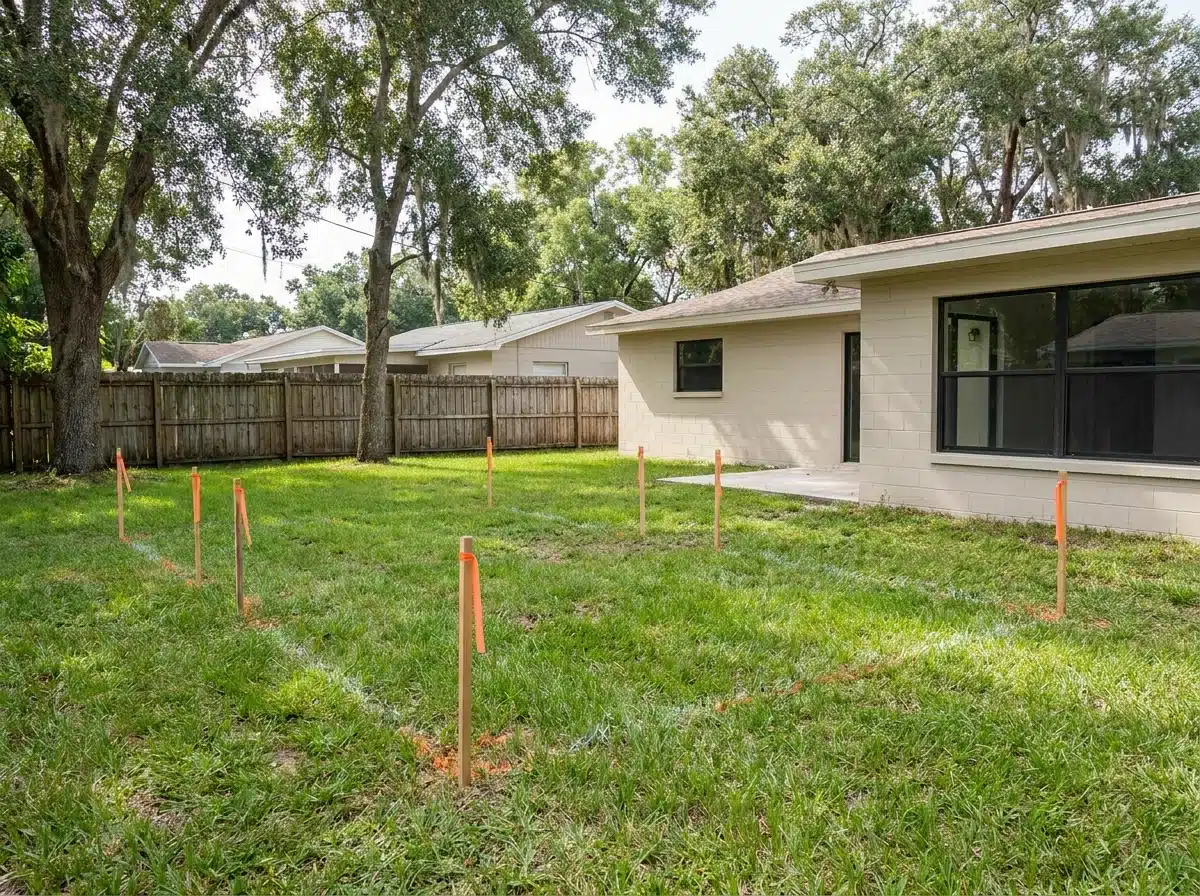
First, consider the backyard cottage plan. A Largo homeowner wants a detached 700-square-foot cottage for an aging parent. The setback review strictly requires 25 feet of clearance from the rear property line. After accounting for their existing pool, the legally buildable area equals just 480 square feet.
Second, consider the garage conversion with rental intent. A Clearwater homeowner wants to convert an attached garage into an Airbnb unit. The structure is viable, but local ordinances strictly demand a minimum 30-day rental period. The rental model must completely shift from nightly to monthly income.
Third, consider the out-of-state transplant utilizing pre-purchased architectural designs. The purchased design placed the unit exactly eight feet from the rear property line. The applicable setback strictly required ten feet for a detached unit locally. A simple pre-design lot review would have completely avoided two weeks of expensive redesigns.
What We Review Under Post-SB-102 Regulations
Founder Jess Dadon strictly reviews four critical things before any ADU design conversation starts.
First, we pull the exact property's current lot coverage. We must know exactly how much of the lot remains legally buildable. Second, we confirm the strictly applicable setbacks based on your specific parcel zoning designation.
An R-1 lot and an R-2 lot frequently carry wildly different local setback rules. Third, we map existing utility service connections and evaluate separate meter requirements. These vital questions take five minutes to investigate but save clients thousands in surprises.
Fourth, we determine your exact intent for the new accessory dwelling unit. Living space, long-term rentals, and short-term rentals carry completely different permitting and operational requirements. Getting these exact answers before drawing anything remains the absolute only way to start properly.
Florida Statute § 713.13 requires filing a formal Notice of Commencement (NOC) before construction begins. We actively file this legal document to protect your property from unexpected mechanic's liens.
Getting a Property-Specific ADU Review Locally
A property-specific lot review must absolutely happen before you speak with any architectural designer.
The exact sequence protecting your budget remains: lot review first, design second, permitting third. A designer operating without confirmed setback data produces drawings that cannot legally be permitted.
Revisions cost massive money and severe time delays when permit queues run ten weeks. A formal property-specific review gives the designer completely confirmed buildable dimensions and utility connection points. Call or email Jess Remodeling with your exact property address immediately.
We review each property against current Pinellas County zoning data before scheduling physical site visits.
ADU Rule Guidance Exclusively Across the Pinellas Peninsula
We strictly focus our ADU remodeling services exclusively within the Pinellas County coastal area.
Jess Remodeling heavily manages complex builds directly from our central headquarters in Largo. We proudly serve Largo, Clearwater, Dunedin, Safety Harbor, Seminole, and St. Petersburg.
This strict geographic focus guarantees lightning-fast project management without logistical delays or out-of-county permit confusion.
More guides for Pinellas County homeowners
Related servicesGet Your Physical Lot Reviewed Before Spending Design Dollars
A quick intake call gives you a highly specific answer, never a generic guess.
Call Jess Dadon directly at (727) 677-5582 or email info@jessremodeling.com. Describe exactly what type of structure you desperately want to physically build.
We heavily review your lot against current setback requirements and strict local coverage limits. We do this completely before you spend a single dollar on expensive architectural designs.