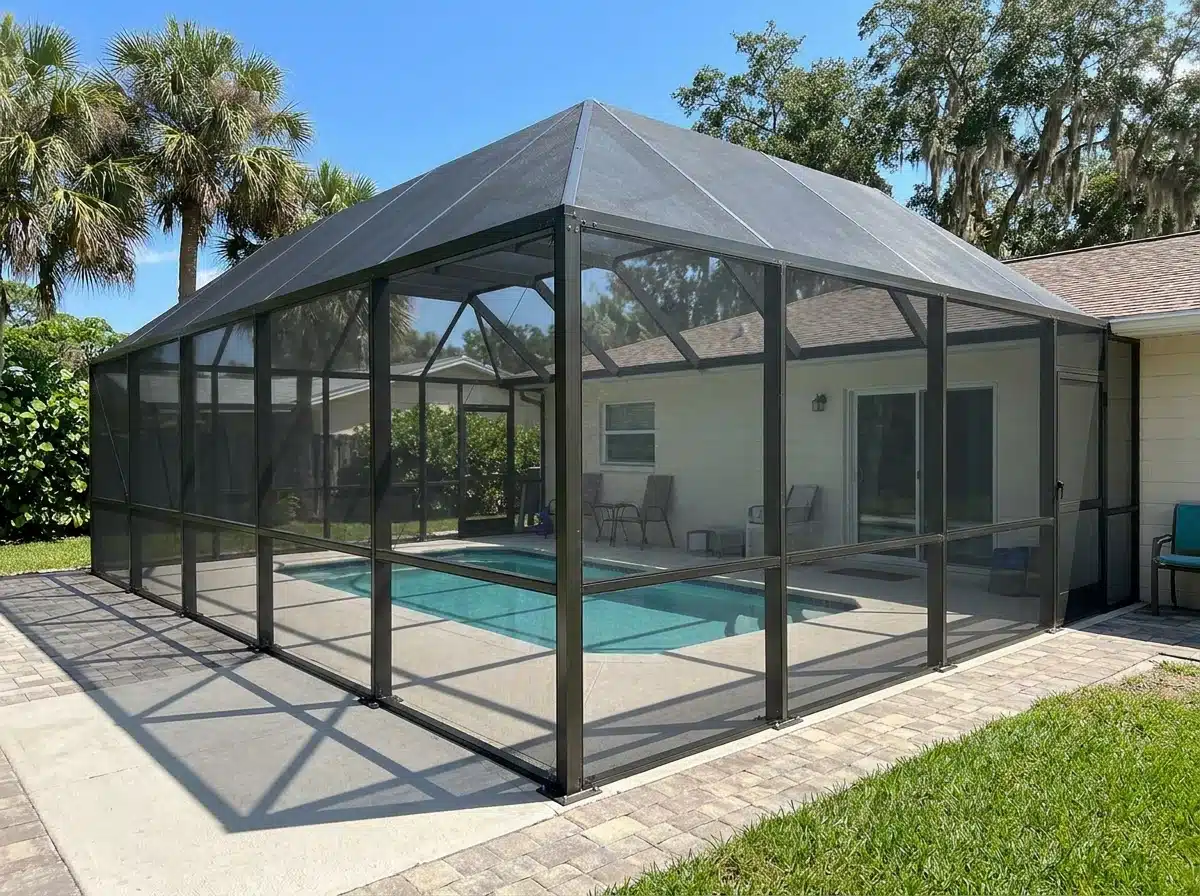
Lanai & Screen Enclosures in Pinellas County, FL
A screened enclosure is a permitted structure requiring strict structural engineering.
What Properly Built Screen Enclosures Require Locally
A screened enclosure is a permitted structure requiring strict structural engineering.
A screened enclosure around your pool or rear patio is not a simple cosmetic addition. In Pinellas County, it legally requires a county building permit and formal structural review. It must strictly meet Florida Building Code (FBC) 8th Edition wind-load requirements.
Aluminum extrusion grades matter more in coastal Florida than almost anywhere else nationally. Many older enclosures feature dangerously thin aluminum framing extrusions. Thinner extrusions are cheaper upfront but fail rapidly during severe coastal wind events.
Pinellas County sits in a highly regulated, high-velocity Wind-Borne Debris Region. Properties near Clearwater Beach and Indian Rocks Beach also face relentless salt-air corrosion. Salt air actively corrodes metal fasteners first, then rapidly attacks the frame joints.
An enclosure built with cheap hardware quickly becomes structurally compromised at connection points. We specify exact aluminum material grades in writing before you sign any proposals.
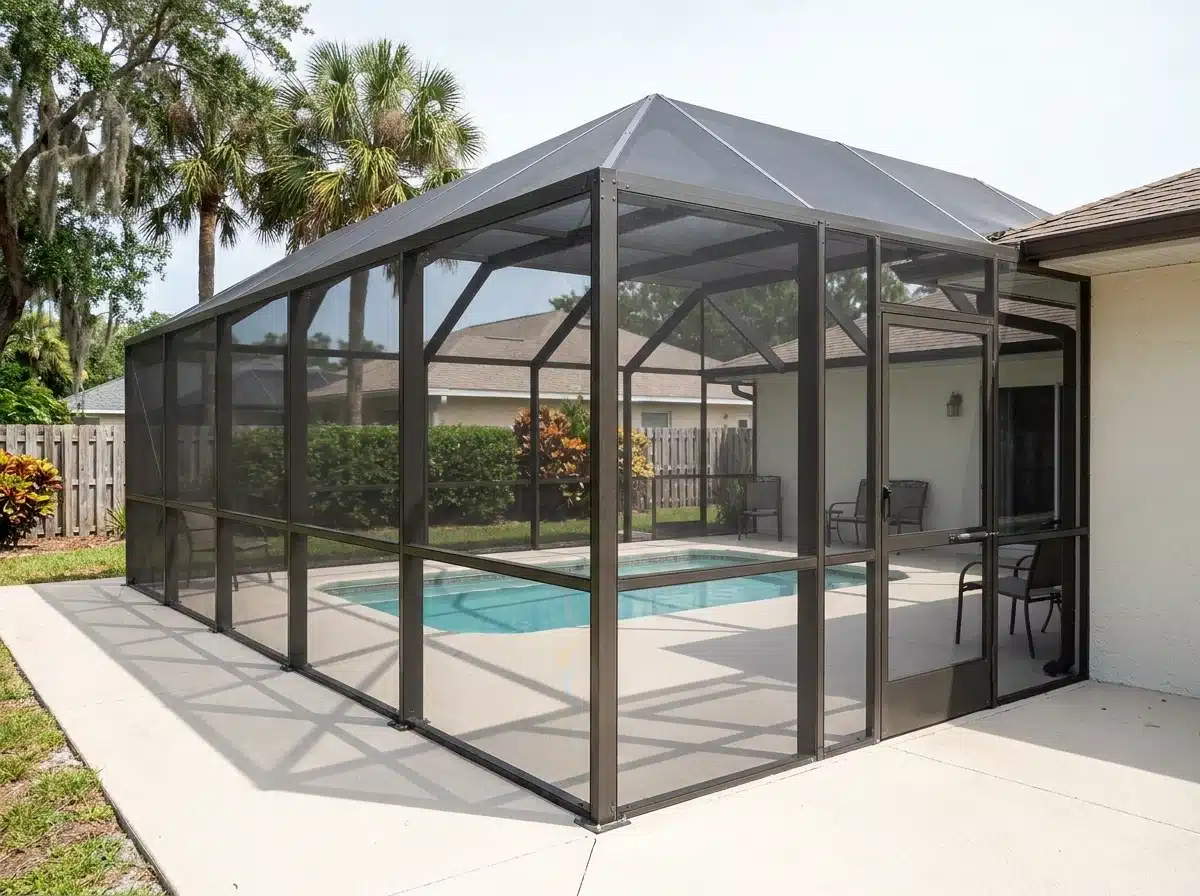
What Coastal Hurricane Seasons Do to Patched Cages
Storm-damaged enclosures are frequently patched poorly rather than being properly rebuilt.
Picture an older pool cage that took a significant wind hit recently. The main frame remains standing, but several screen bays completely blew out. A repair replaced the mesh, leaving mismatched colors and highly uneven tension.
Now, one main structural corner post sits slightly out of plumb. The primary screen door drags heavily and fails to close cleanly. Every single hurricane season, the screens blow out much faster than they previously did.
This happens because the compromised frame no longer carries the wind load correctly. When the structural geometry shifts, the screen panels carry tension highly unevenly. The tension forces the mesh to fail at the corners repeatedly.
Salt air finishes the destruction by corroding microscopic fractures at the stress points. Patching a structurally compromised enclosure simply delays the inevitable and expensive full replacement.
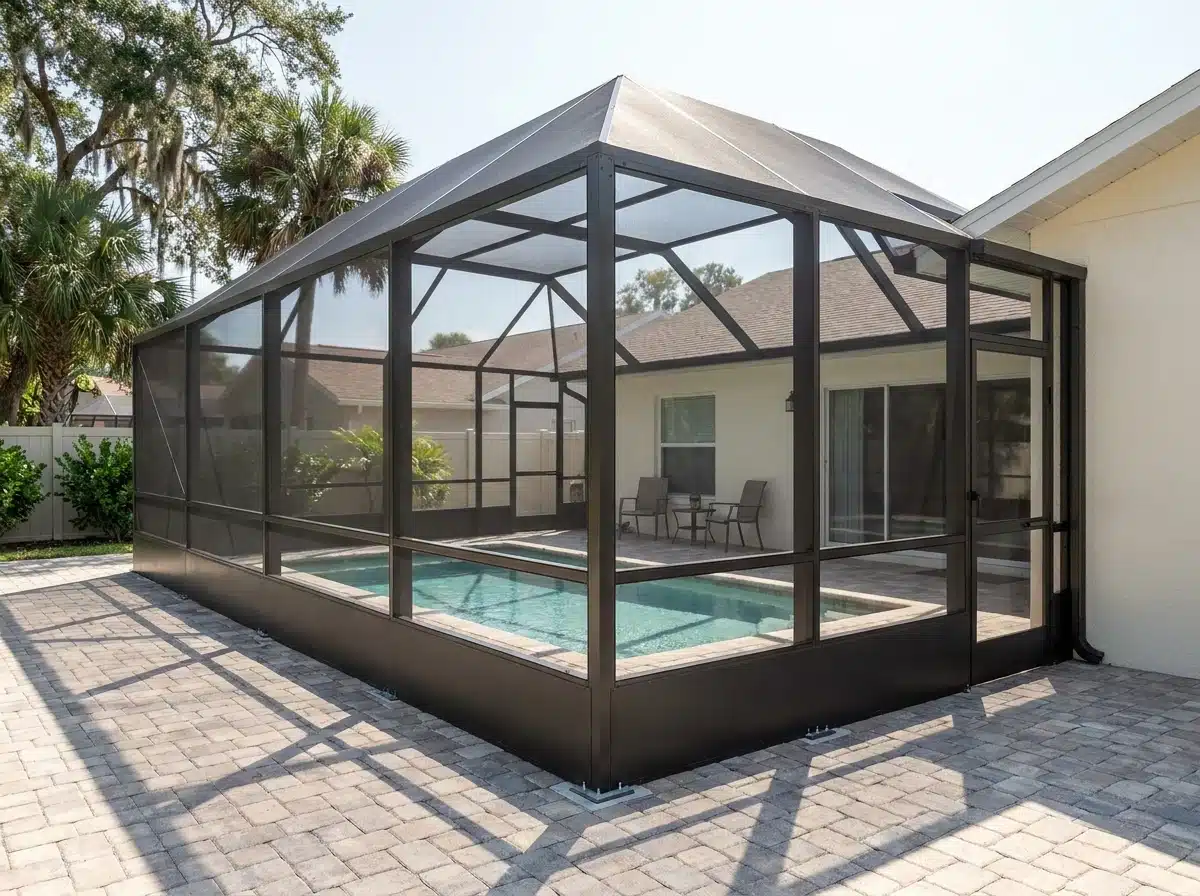
Assessing Frame Conditions Before Quoting a Full Replacement
We physically assess the entire structure before writing any replacement scope.
Founder Jess Dadon personally inspects every enclosure before estimating any replacement costs. We rigorously check three critical structural points before evaluating the actual screen mesh.
First, we check the base plates connecting the aluminum uprights to the concrete deck. If these concrete fasteners are heavily corroded, the structural integrity of the entire bay fails. Second, we verify the corner and ridge connections for lateral pressure resistance.
A post shifted just two degrees changes how the frame distributes load during storms. Third, we evaluate the existing screen gauge against current coastal degradation. If the existing frame is safe to keep, we will tell you honestly.
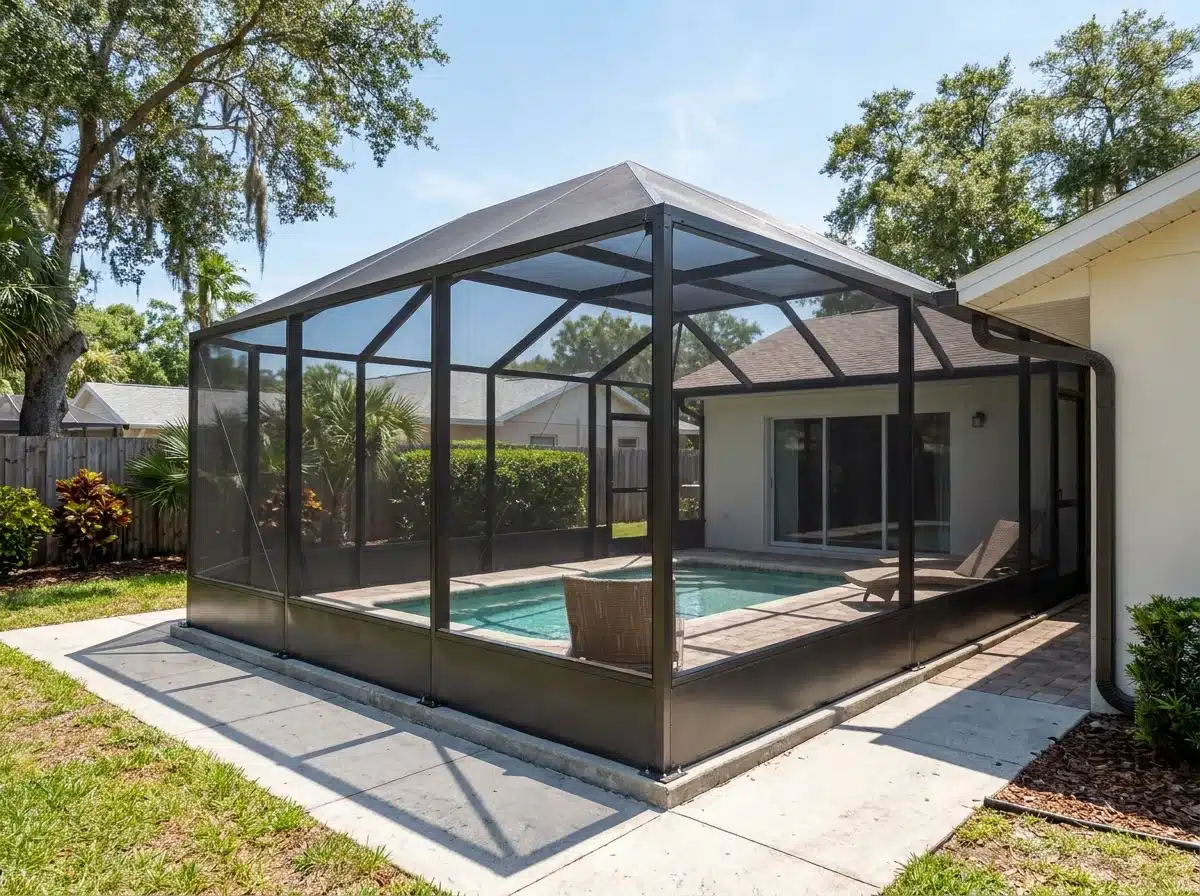
Material Grades and Wind-Load Ratings Specified in Writing
You always know exactly what grade of aluminum goes into your enclosure.
Every proposal includes the exact aluminum extrusion specification and fastener material. We also specify the exact ASCE 7-22 wind-load rating the frame meets. This documentation is written formally into your contract, never delivered as a verbal promise.
Pinellas County Construction Licensing Board (PCCLB) permit reviews require strict structural submittals. These complex submittals must include detailed wind-load calculations for your exact property. Coastal properties require structures to withstand ultimate design wind speeds of 140 to 150 mph.
Florida Statute § 713.13 requires filing a formal Notice of Commencement (NOC) before construction begins. We actively file this necessary legal document to protect your property from mechanic's liens.
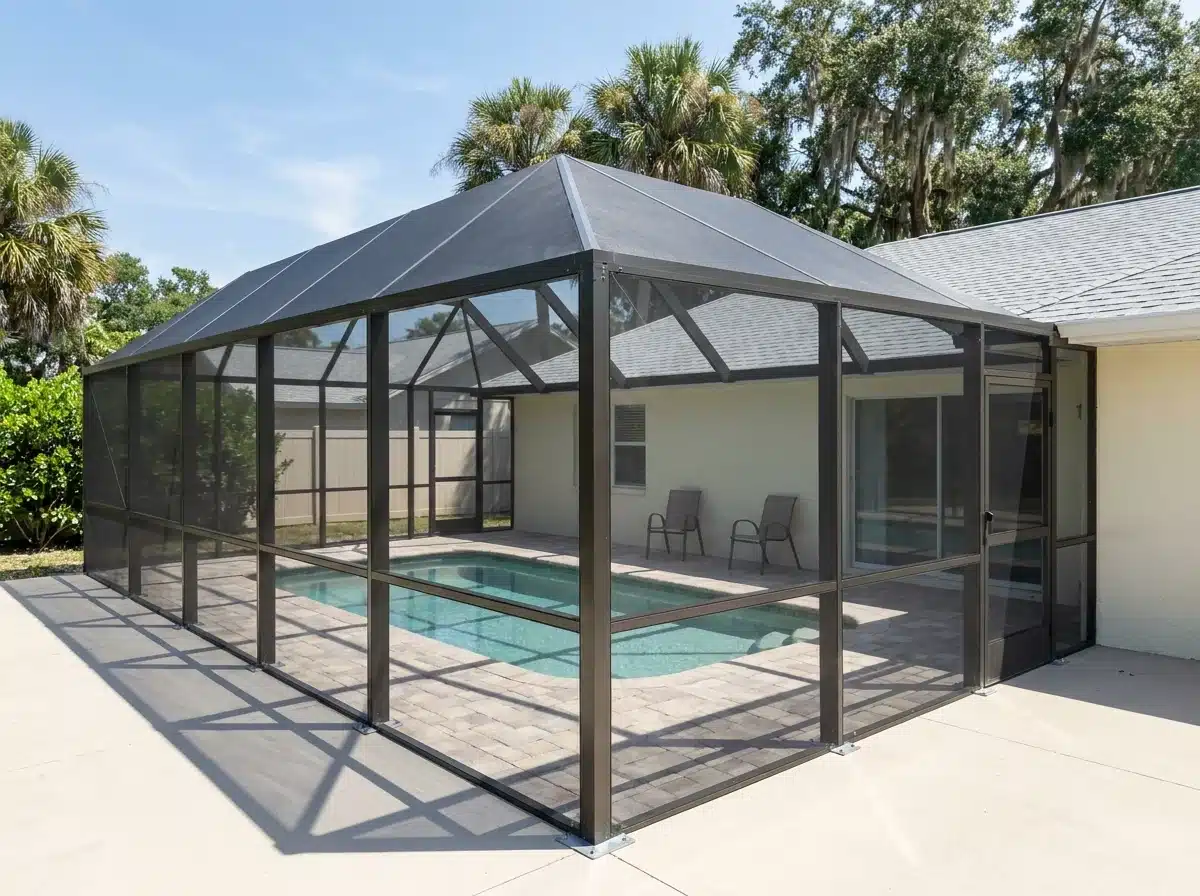
Strict Material Standards for Coastal Pinellas Enclosures
Every material is strictly specified for harsh coastal Pinellas County weather conditions.
We never use minimum-spec materials that barely pass paper code requirements.
We utilize thick aluminum extrusions appropriate for high-velocity coastal wind zones. We install stainless steel or hot-dipped galvanized hardware exclusively throughout the entire structure. We strictly ban cheap zinc-plated fasteners in base plates where salt-air exposure peaks.
We install heavy 20x20 fiberglass mesh for pools in direct coastal exposure zones. This thicker mesh handles intense organic debris loads and severe UV degradation effortlessly. We use heavy epoxy-anchored base plates set deep into the existing concrete deck.
We completely avoid cheap surface-mounted brackets that shift during the first heavy storm. Marine-grade hinges and latches are standard for all exterior doors to prevent rapid corrosion.
The Pool Cage Build Sequence From Permits to Screening
Every custom enclosure we build strictly follows a highly regulated operational sequence.
We never take shortcuts between stages during the complex enclosure build process.
Permitting and Structural Assessment
We identify the correct permitting agency and submit strict structural calculations.
We submit exact wind-load calculations specific to your address and proposed dimensions. Pinellas County residential enclosure permits typically require two to four weeks for formal review. We monitor the review status heavily to prevent unnecessary project delays.
Demolition and Active Frame Installation
Frame sections are assembled in a strict, highly calculated structural sequence.
We completely remove the old compromised frame down to the concrete deck. We heavily inspect the existing concrete anchor points before setting new base plates. We install the main uprights first, followed closely by the heavy ridge beam.
Screen Installation and Final Inspection
Screen panels are only installed after the heavy frame passes rough inspection.
We utilize a spline installation method allowing for single panel replacement later. This is critical when a single screen takes minor debris damage during storms. The final inspection officially closes the permit, leaving you with a clean property record.
Enclosures and Pool Cages Across the Pinellas Peninsula
We strictly build custom coastal enclosures throughout the Pinellas County area.
Jess Remodeling heavily manages complex builds from our central Largo headquarters. We proudly serve Largo, Clearwater, Dunedin, Belleair, Indian Rocks Beach, and Seminole.
We expertly navigate the strict Coastal Construction Control Line (CCCL) for beachfront properties. We prioritize post-hurricane replacement projects during heavy storm season assessment windows.
- Belleair
- Clearwater
- Dunedin
- Indian Rocks Beach
- Largo
- Seminole
Schedule Your Enclosure Assessment Before Storm Season
The best time to replace a compromised pool cage is before storms arrive.
Do not wait for a compromised frame to collapse entirely onto your patio. Call Jess Dadon directly at (727) 677-5582 or email info@jessremodeling.com today.
We will schedule a thorough physical site assessment directly at your property. We will give you a written scope based strictly on what your structure actually needs.
Frequent Questions About Pinellas County Pool Enclosures
Review exactly what local regulations dictate for custom coastal screen enclosures.
We prioritize complete transparency regarding structural engineering and high-velocity wind codes.
01How much does a new pool cage cost in Pinellas County?
New custom pool enclosures typically range from $15,000 to over $35,000.
The total square footage and required ASCE 7-22 wind load ratings drive the final cost. Thicker aluminum extrusions required for coastal zones are significantly more expensive than inland materials. We provide exact pricing only after physically measuring your pool deck.
02Does a new screen enclosure require a county building permit?
Yes, every new screen enclosure strictly requires a formal building permit.
The county requires engineered plans proving the structure meets current FBC wind load requirements. Attempting to build an enclosure without a permit leaves you completely uninsurable during hurricanes.
03What wind speeds do your pool cages withstand?
We engineer pool cages to meet ASCE 7-22 requirements for 140 to 150 mph.
Coastal Pinellas County sits entirely in a highly regulated Wind-Borne Debris Region. Our enclosures are structurally designed to survive intense, high-velocity coastal hurricane events safely.
04Can you just replace the screens on my old bent frame?
We do not install new screens on structurally compromised or bent aluminum frames.
If the main posts have shifted, the new screens will blow out immediately. We perform a strict physical assessment to determine if your frame is safe to rescreen.
05How long does it take to build a new pool enclosure?
The physical construction process typically takes one to two weeks to complete.
However, custom aluminum fabrication and local permit review frequently add four to eight weeks. We build the exact fabrication and permitting timeline into your initial project schedule.