Define your basic bathroom remodel by deciding what stays, what gets replaced in place, and what moves.
We use written scopes to describe the work, so tile choices and contractor estimates reflect the same project.
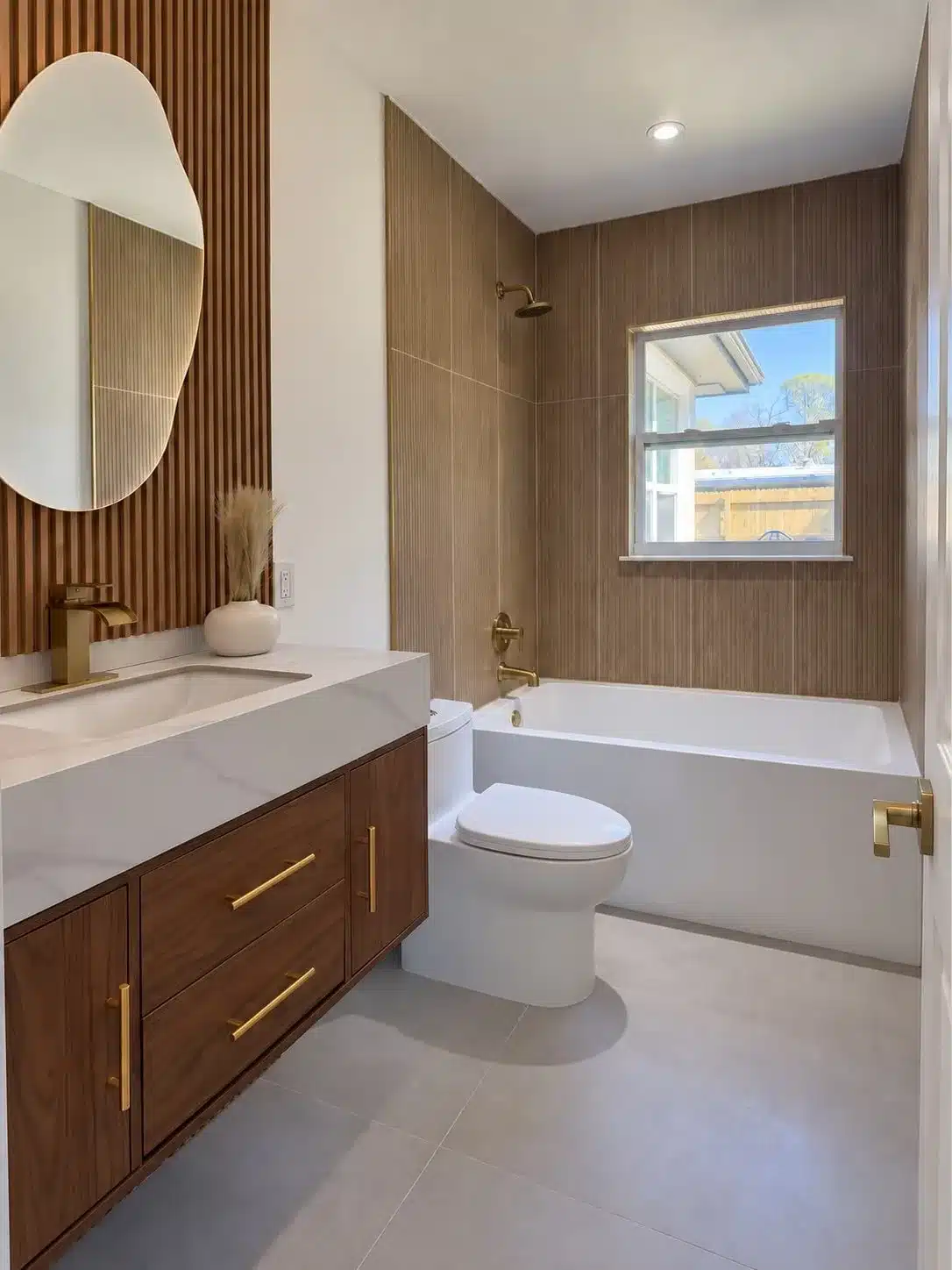
Define your basic bathroom remodel by deciding what stays, what gets replaced in place, and what moves.
We use written scopes to describe the work, so tile choices and contractor estimates reflect the same project.
A surface update changes visible materials while keeping the room’s layout and systems largely intact. Moving fixtures or opening shower walls adds work that needs its own description.
The word “basic” leaves too much open. Replacing vanity hardware is a surface change. Replacing the vanity can also involve plumbing connections, even when its location stays the same.
One September 2026 Tampa homeowner sought basic bathroom modernization and considered doing demolition personally.
We offer a free site visit to discuss our bathroom renovation services.
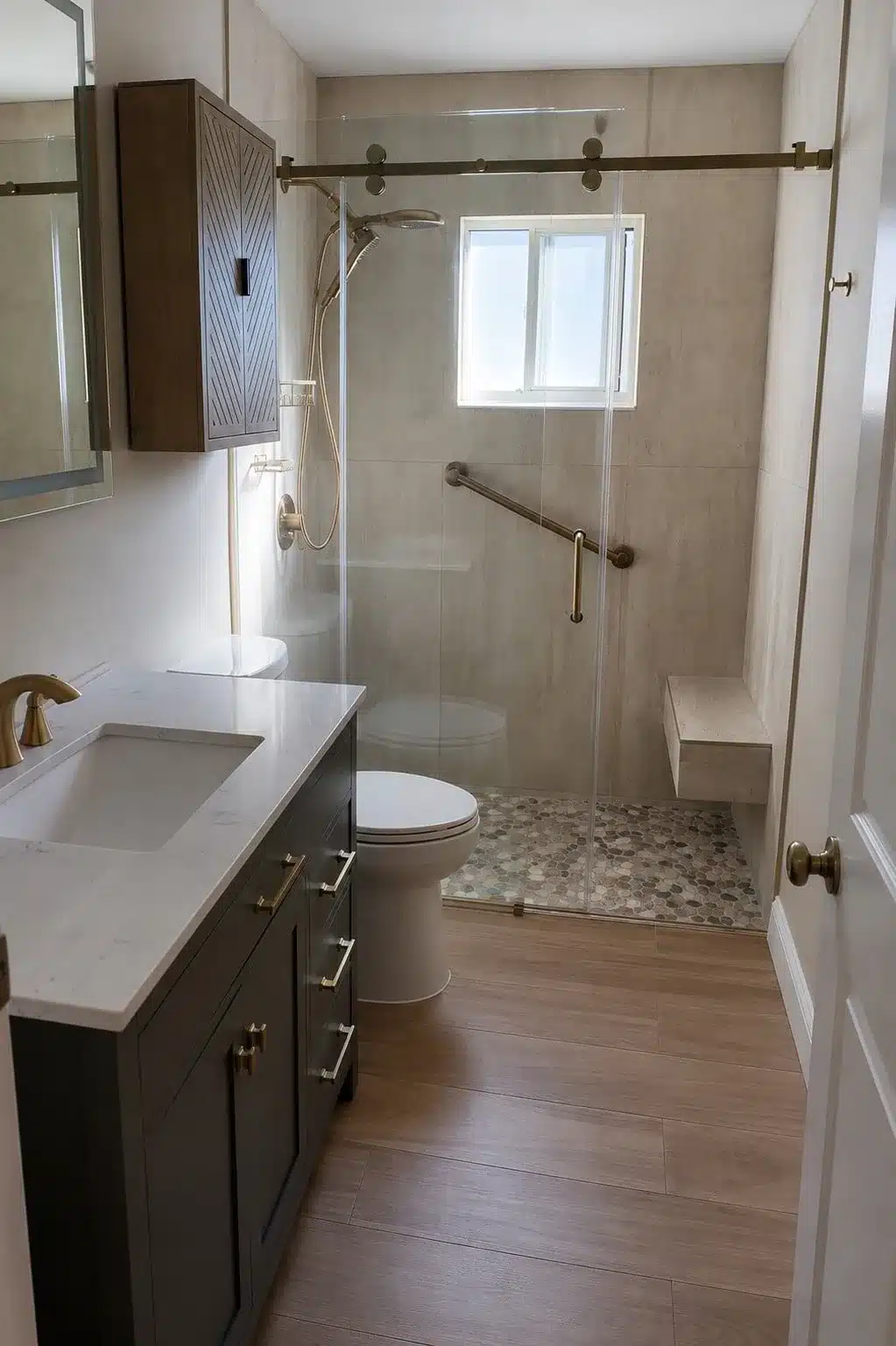
Describe each fixture as staying, being replaced in place or moving to a new location. A new toilet in the existing location still involves removal and installation.
That distinction gives the estimate a clear starting point without requiring finish selections.
A fixture move belongs in the scope before its replacement is purchased. The plan must account for supply lines, drains, electrical connections and work behind shower finishes.
In a slab-on-grade house, a drain move can involve access through the concrete floor. Keeping the existing drain location can therefore affect more than the fixture arrangement.
A shower replacement scope should identify removal, surface preparation, waterproofing and finish installation together.
Electrical work is a separately regulated trade under Florida Chapter 489. Replacing a light at its existing connection differs from moving that connection or adding wiring.
A general-contractor credential does not automatically authorize self-performance of every trade.
Our founder, Jess Dadon, holds Florida contractor license #CGC1540667. We coordinate trades as part of our process, with appropriately licensed professionals needed for regulated plumbing and electrical work.
Call us at (727) 677-5582 to request a free site visit with Jess Remodeling. We can discuss your Tampa Bay bathroom’s scope before you select finishes or compare estimates.
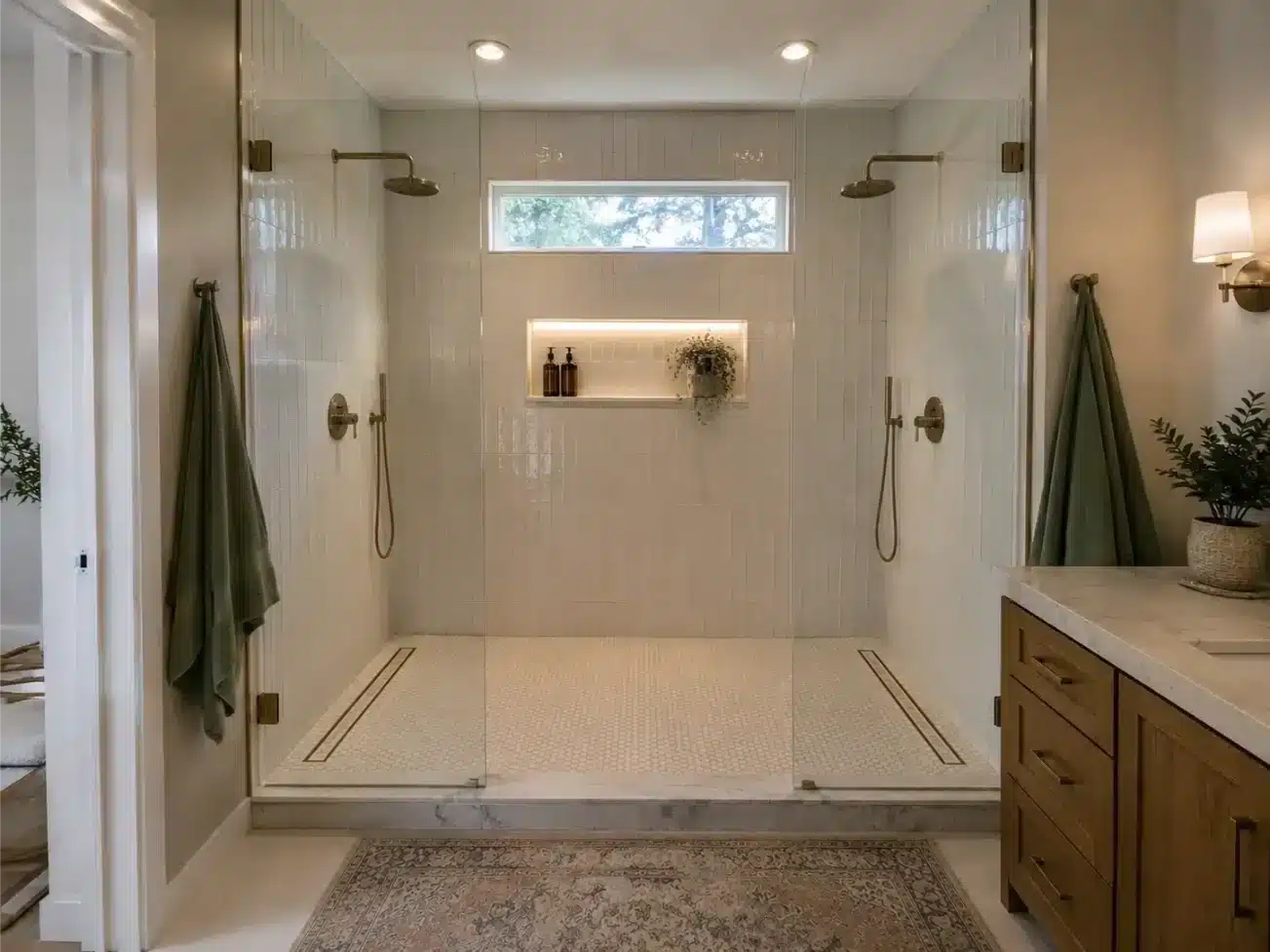
The property’s jurisdiction and proposed work determine permit routing and requirements. Check local requirements with the responsible building department and have the scope professionally reviewed before demolition.
PCCLB, the Pinellas County Construction Licensing Board, is not the universal building-permit authority across Tampa Bay. Hillsborough and Pasco properties follow their responsible city or county permit routes.
The eighth-edition Florida Building Code became effective December 31, 2023.
For pre-1978 housing, EPA lead-safe renovation rules apply to covered paid work that disturbs paint. Applicable requirements include firm certification, certified renovators and lead-safe work practices.
The home’s age and planned disturbance belong in the demolition discussion. Removing painted materials before that review can change the conditions professionals need to assess.
Matching inclusions make bathroom estimates easier to compare.
We provide written scopes, documented change orders, trade coordination and inspection management.
Each estimate should address the same responsibilities:
The agreed layout and connection locations narrow the products that fit. Vanity, shower, flooring, hardware and lighting choices all need to match the planned installation work.
A shower selection depends on the agreed footprint and drain arrangement. Flooring choices need to account for the surfaces beneath them and transitions into adjoining areas.
If the project includes aging-in-place bathroom features, identify those needs before closing walls or selecting the shower configuration. Features such as grab bars can affect support behind the finished wall.
We offer a free site visit to discuss the bathroom and define the proposed work.
Removing tile or painted materials can introduce dust hazards and expose concealed systems. Tile demolition may involve silica exposure. A homeowner’s willingness to remove materials does not establish that the proposed demolition arrangement suits the project.
Covered residential alterations can require current-code plans. A surface update and a layout change may need different submissions. Establish the scope before committing to architectural or engineering services, and clarify who will supply any needed drawings.
The written scope can assign purchasing and storage to the homeowner or contractor, depending on the arrangement. It should also address delivery and handling of unsuitable or damaged products.
Our process includes documented change orders for changes to the agreed scope. A change order should describe the added repair and its effect on price and scheduling. Hidden conditions cannot be fully described by a finish selection or an estimate based only on visible surfaces.
Jess Remodeling · 491 East Lake Drive, Largo, FL 33771 · (727) 677-5582